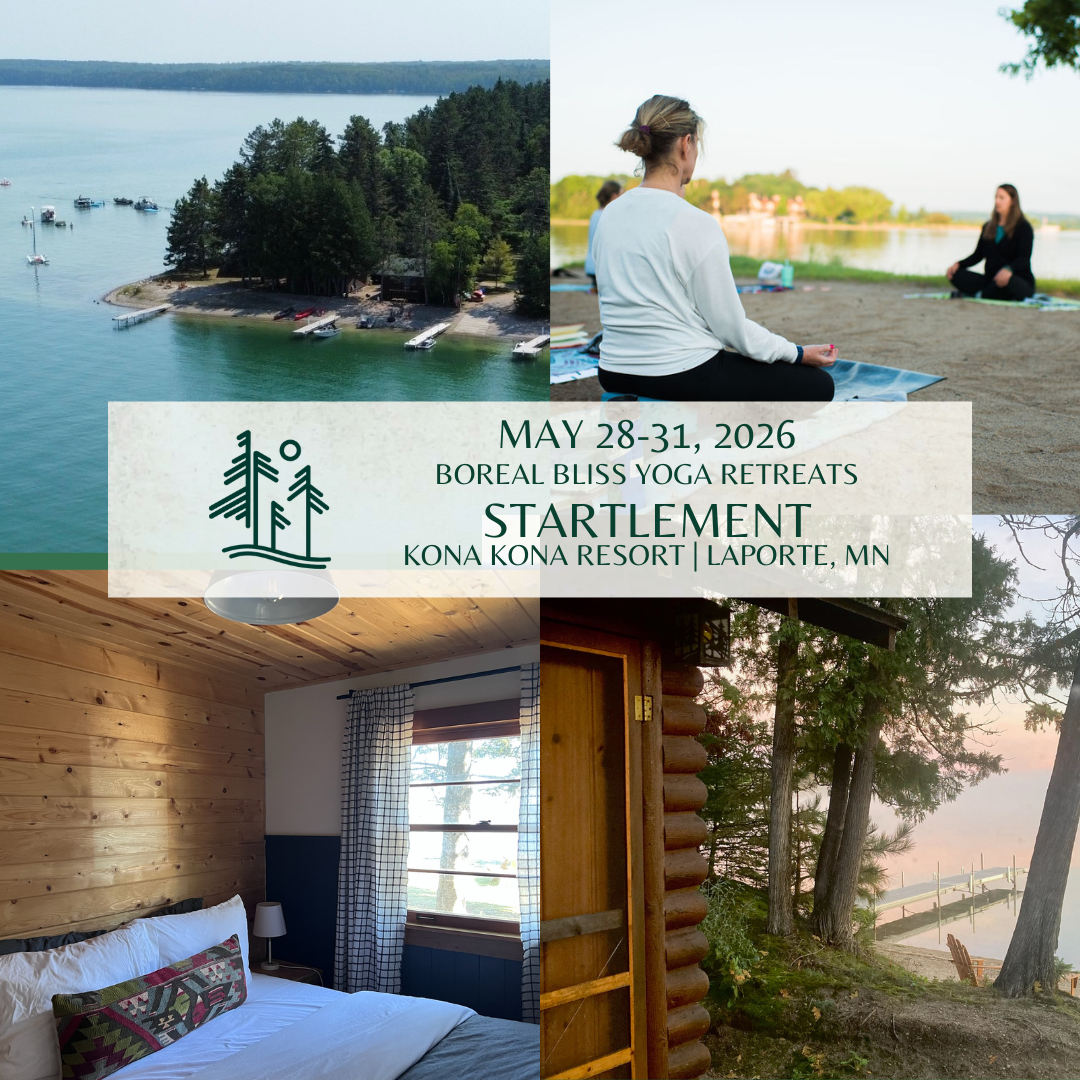
Retreat Recap: in defense of poetry
When I chose the book Startlement for the spring retreats, I was sure it would be a 10/10 selection for everyone. The book is a collection of the best work of one our most talented poets, 24th poet laureate of the United States, Ada Limon. Limon has stolen my heart these past many years with the way she blends the mundane, the depths of grief, observations about nature, and wonder in a conversational, clever way.
So when Bryana called me about six weeks before the retreat in a borderline panic, I was shocked.
“Do you actually like this book?” she said. “Like when you read these poems you want to read them in yoga classes?”
This was the first clue that maybe others don’t have the same relationship with poetry that I do.
I started to write out notes on “how to read poetry” and “how to write poetry.” I read some of the books on my shelves on this subject.
One morning I was at a coffee shop and wrote a poem about how to read poetry. The whole premise was so absurd to me I couldn’t stop giggling. It felt like writing about how to drink water or why it’s important to go on vacation.
On the way to the retreat, Stacy confessed, “I think I am like Bryana. I didn’t really get the book. I only made it about a third of the way through.”
After which I launched into a passionate attempt to persuade Stacy why this book is essential.
After about thirty minutes I concluded my pitch. “Okay, now do you feel differently about it?”
“No.” she said and we burst into laughter.
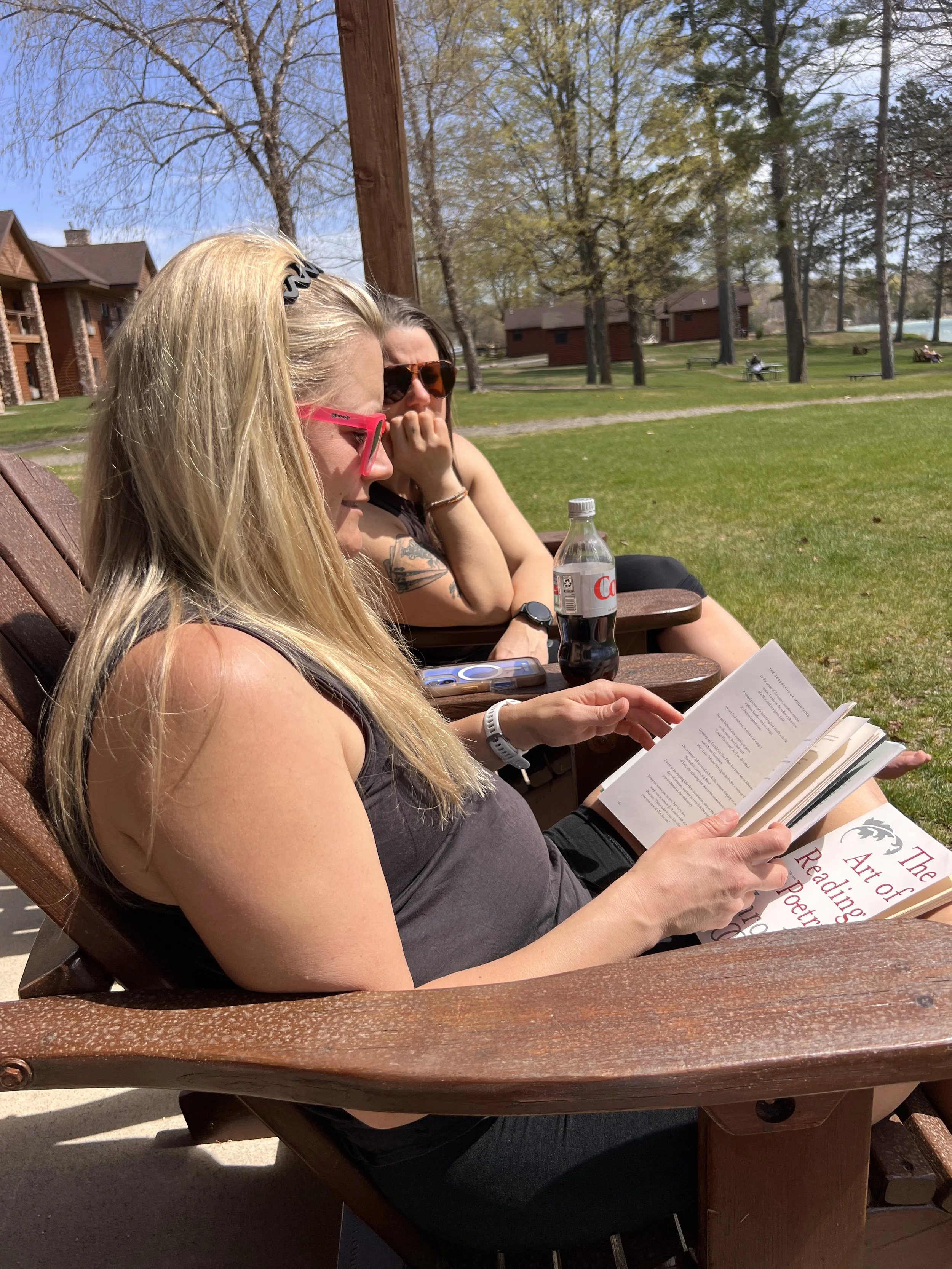
Then at the opening circle last weekend, at our Lake Life retreat at Sugar Lake Lodge, I asked who had read the book.
Three hands went up. THREE. I couldn’t believe it!
I asked, “who thinks they don’t like poetry?” Nearly all hands shot up.
So the challenge was laid out for me: 72 hours to convince these women that poetry can save your life sometimes.
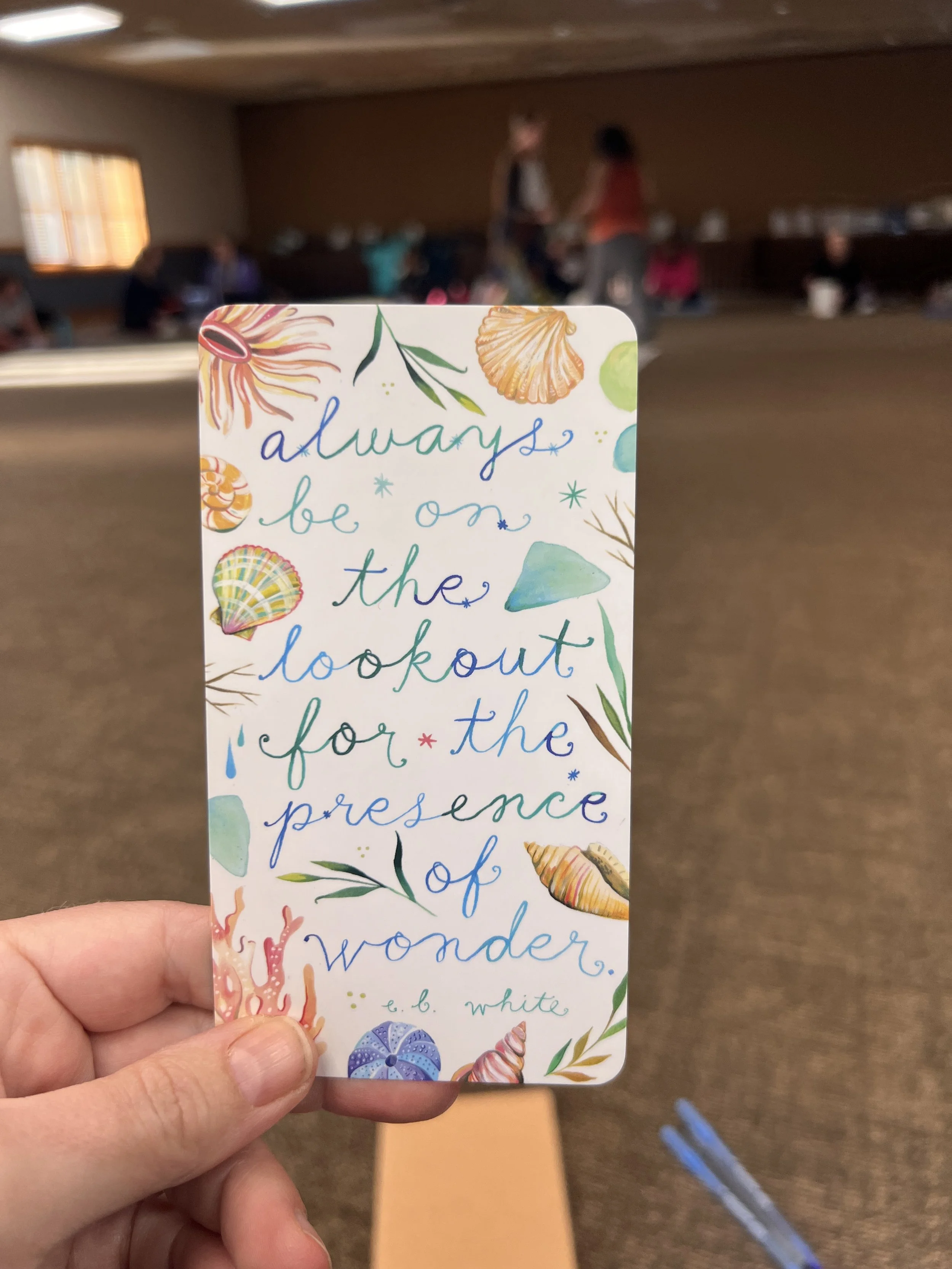
To start things off strong, I shared the poem,“Instructions on Not Giving Up.” (I am going to be mindful of not sharing any of Ada’s poetry that is not publicly available. This poem can also be found on page 125.)
I shared the following thoughts that I thought might be helpful:
How to read poetry
It is not linear
Sip it vs. devour
Poetry is not meant to be fully resolved/understood
Should be felt/experienced not necessarily understood
Poetry can save our life sometimes
Read it out loud
Read it to others
Allow confusion to exist
Look for one line that sticks out to you
You may only like 10% of the poems in a book, or one line from a poem, that is okay!
Pay attention to images that come to mind
Connect it to your life
Trust your interpretation. Your feeling is valid.
Great poetry is…
A great poem feels inevitable
Greatness in poetry depends on splendor or figurative language and on cognitive power
Poetic power fuses thinking and remembering so we cannot separate the two
Poetry brings its own past alive in the present
Why should you write poetry?
Can help us process our life/emotions/grief/trauma
Doesn’t have to be for anyone other than ourselves
Can help us remember big emotions or memorable experiences
Can provide a portal for us to travel through to remember what it was like when we first lost someone or when we first held a child
Can make your cards, letters, birthday greetings more fun!
Poems are meant to be shared! Read them aloud, to yourself or to others.
Even a simple list can be powerful (for example the last time I was in my grandparents home I made a list of everything I could see)
As we closed the opening circle, we learned there were wildfires north of Two Harbors, threatening Stacy’s home and many members of her family.
The wildfire accelerated so quickly, it was difficult to wrap our heads around it. It seemed to come out of nowhere. Stacy couldn’t go home, because the roads were closed. After a mostly sleepless night, we awoke to the good news that the fire had not spread beyond 500 acres, and Stacy’s home was safe. Unfortunately, we learned later, 8 homes and 32 structures were lost on the north shore. All of this was very surreal.
Underlying the whole retreat was a cognitive dissonance. In the retreat space we are experiencing peace, joy, and community. In our daily lives, an undercurrent of angst is ever present. There is much to worry about, much to feel heartbroken about, much to carry. How do we hold both?
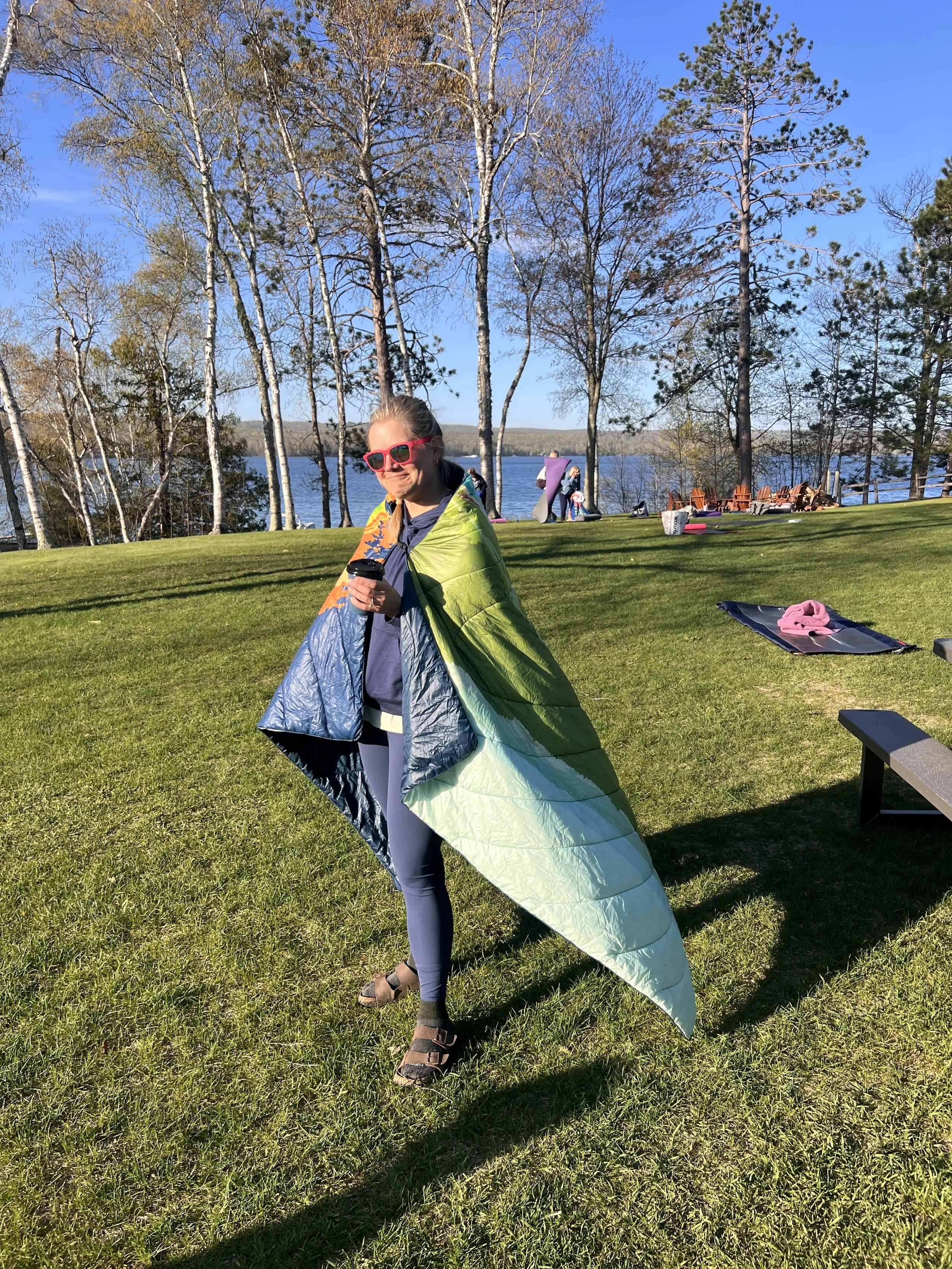
We started the day Saturday with meditation outside, followed by yoga outside. The sun was beautiful. The lake was calm.
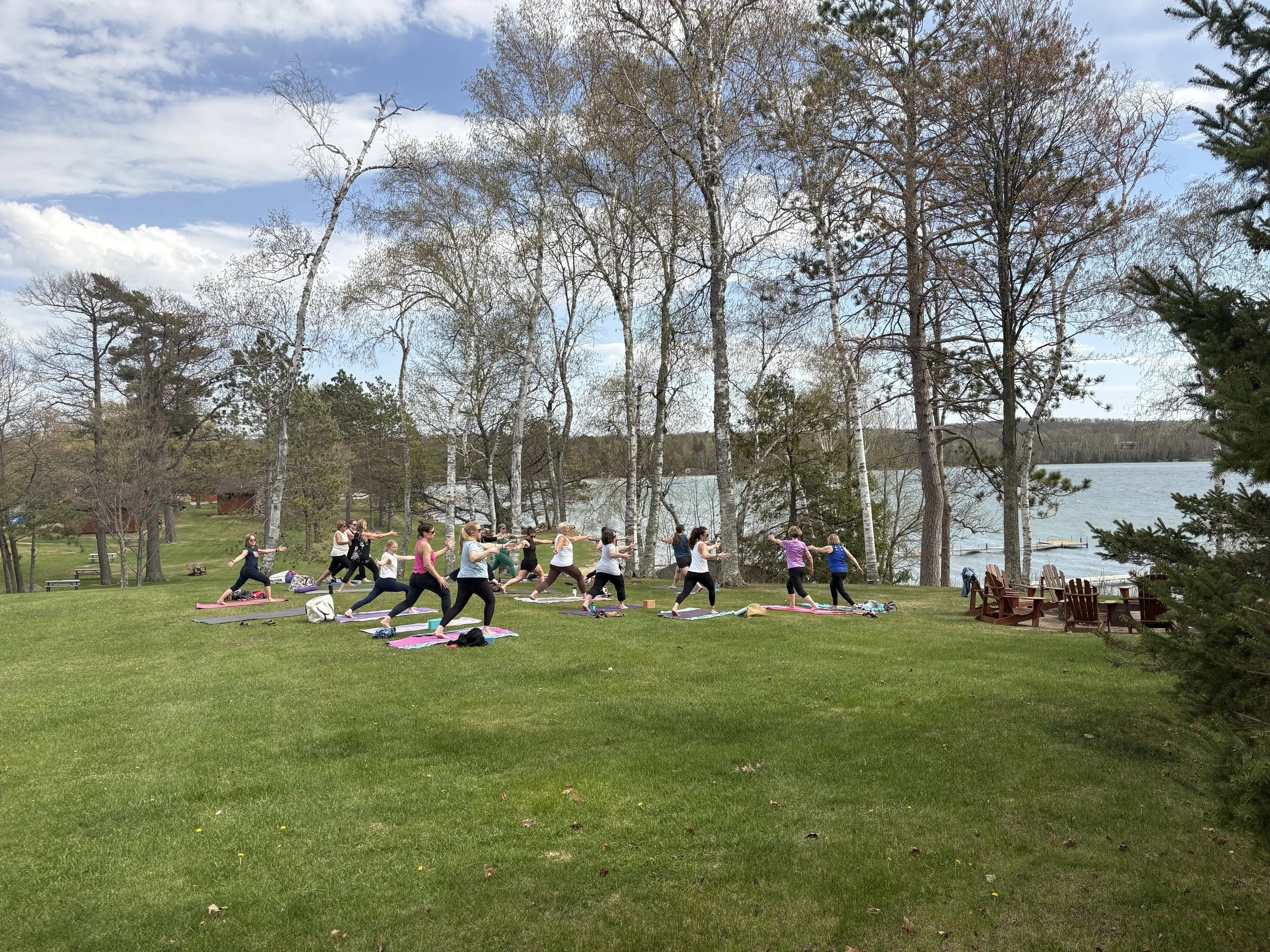
After THE LONGEST SPRING IN HISTORY, I could practically feel the seasonal depression falling away as I soaked up the first nice days, watched fluffy goslings on the shore, delighted in the chubby warblers and sparkling waves on the lake. I wrote the poem below after our outdoor class:
We were disappointed it would not be summer.
The water too cold for swimming.
The gardens still fallow,
The trees yet barren and leafless.
I did not expect to fall in love with catkins.
Green pants dancing in the breeze.
Birch trees are wind pollinators.
Maybe I am too.
The wind billowing through my limbs,
My hair,
Releasing my being into the ether.
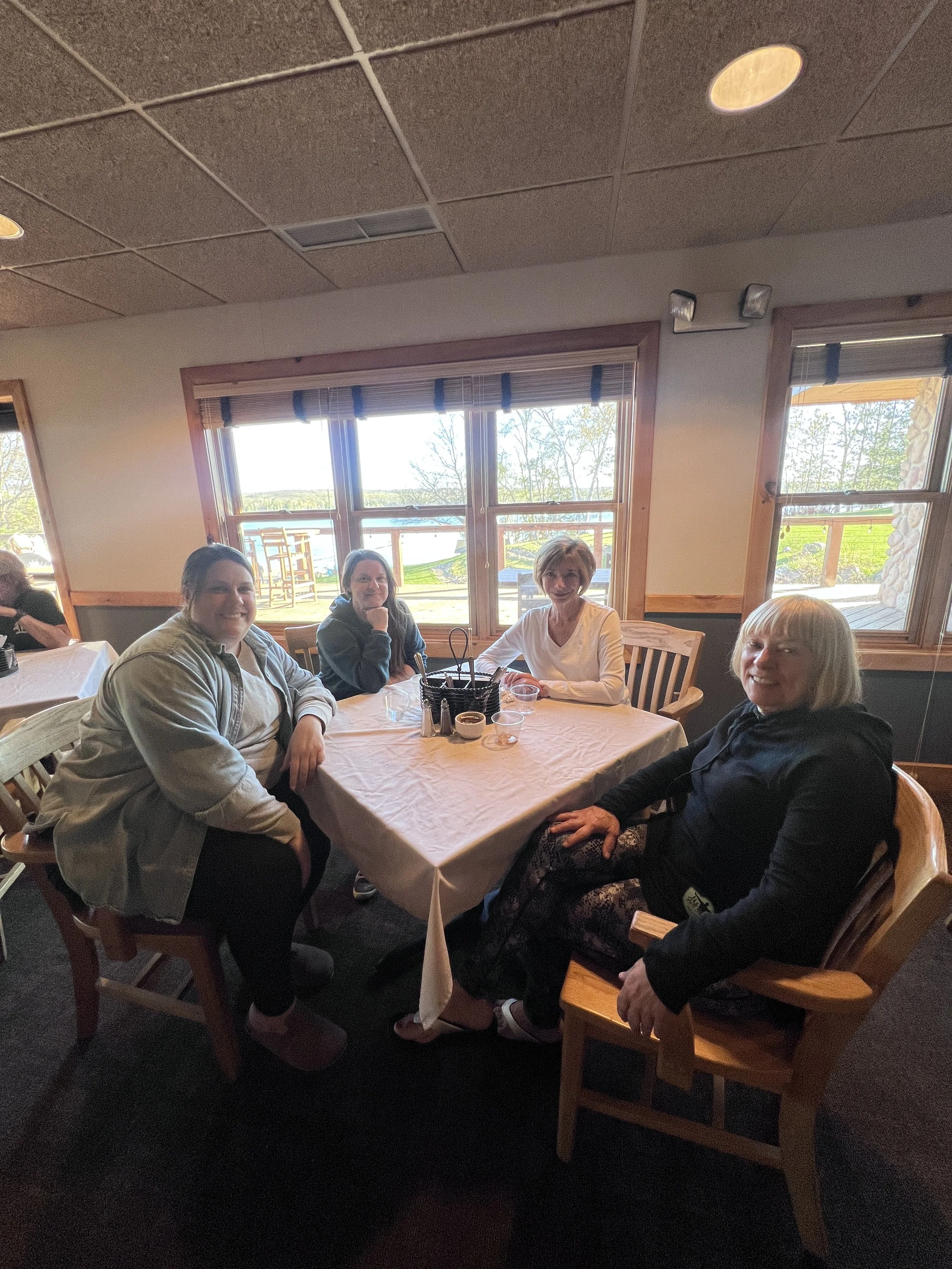
After a delicious, luxurious brunch, about 14 of us went in search of Schoolcraft State Park. Retreaters were surprised to learn I had not been to Schoolcraft before despite “leading the hike.” We were in it together!
Inspired by the poem Calling Things What They Are, we were inspired to name everything we possibly could.
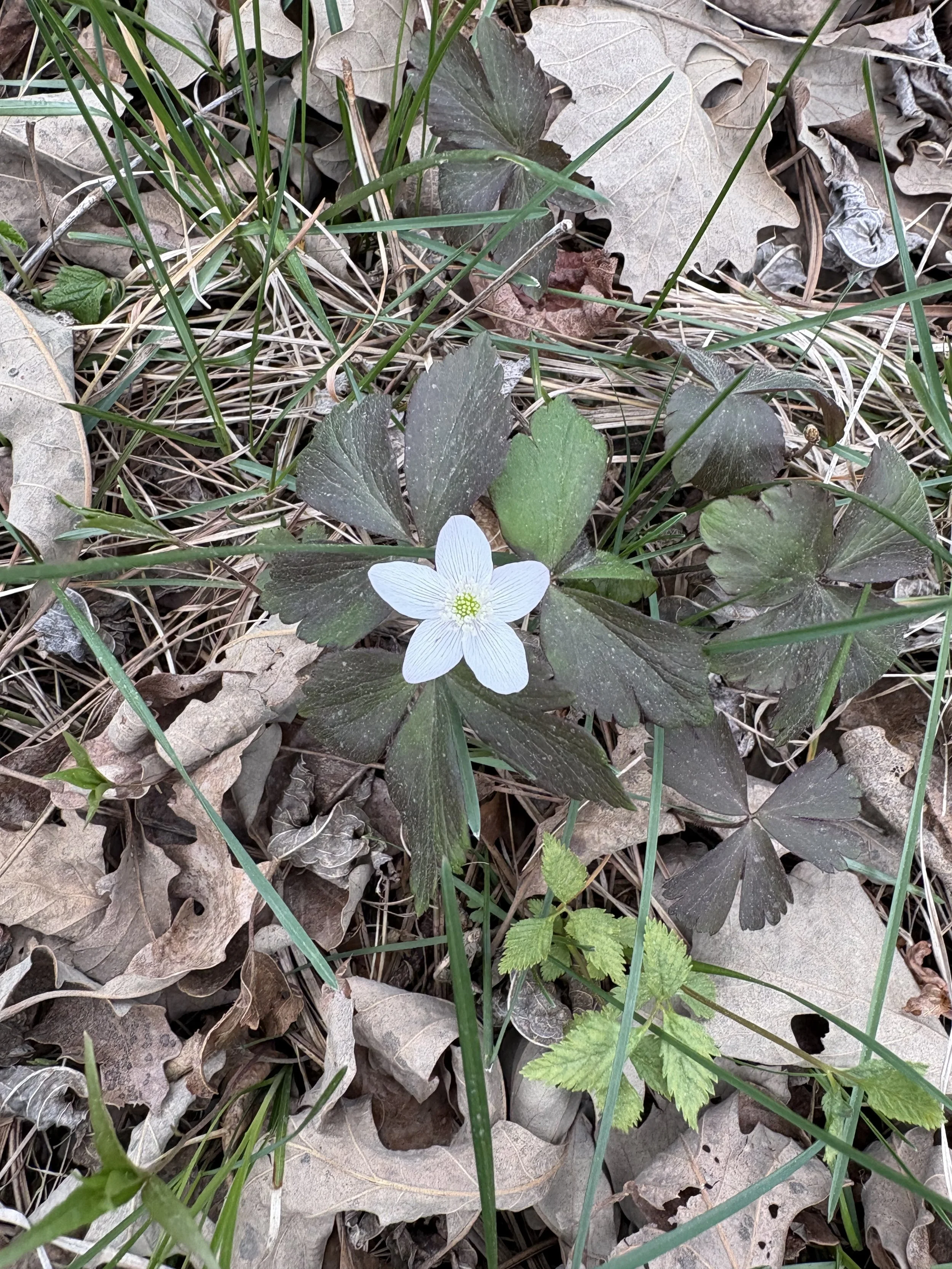
We hiked the two mile loop and made note of all the wonders along the way. We shouted out things as we saw them. Mushrooms! Bloodroot! Trillium! Wood anemone! Fiddleheads! TURDS!
We brushed many ticks off our legs.
We learned the difference between Aspen and Birch, White Pine and Red Pine.
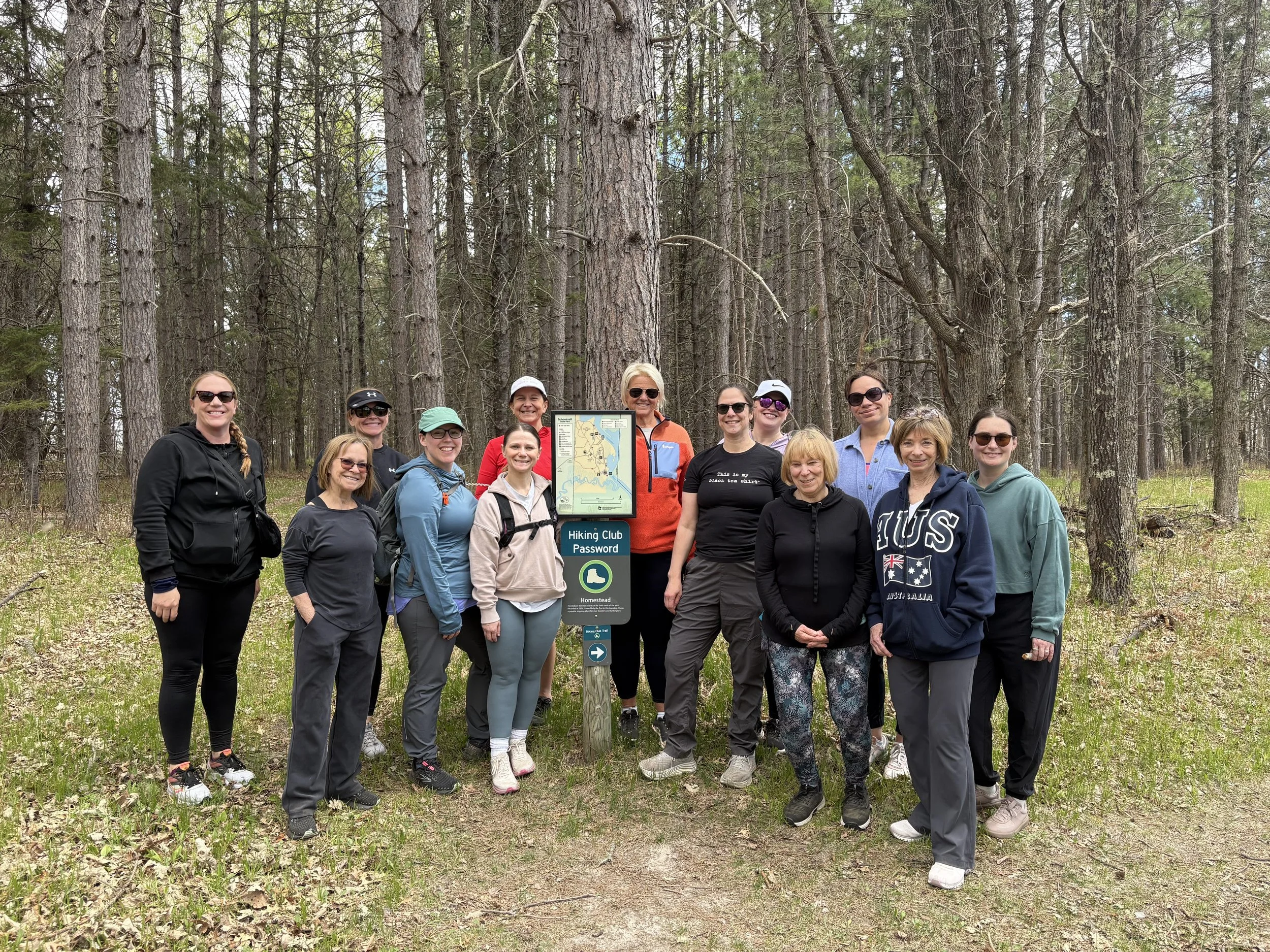
We found the Hiking Club Password! (All State Parks have a hiking club trail and a hiking club password, a fun little scavenger hunt!)
I noticed that I was so busy looking at bark and leaves that my brain didn’t have any room to ruminate or wander.
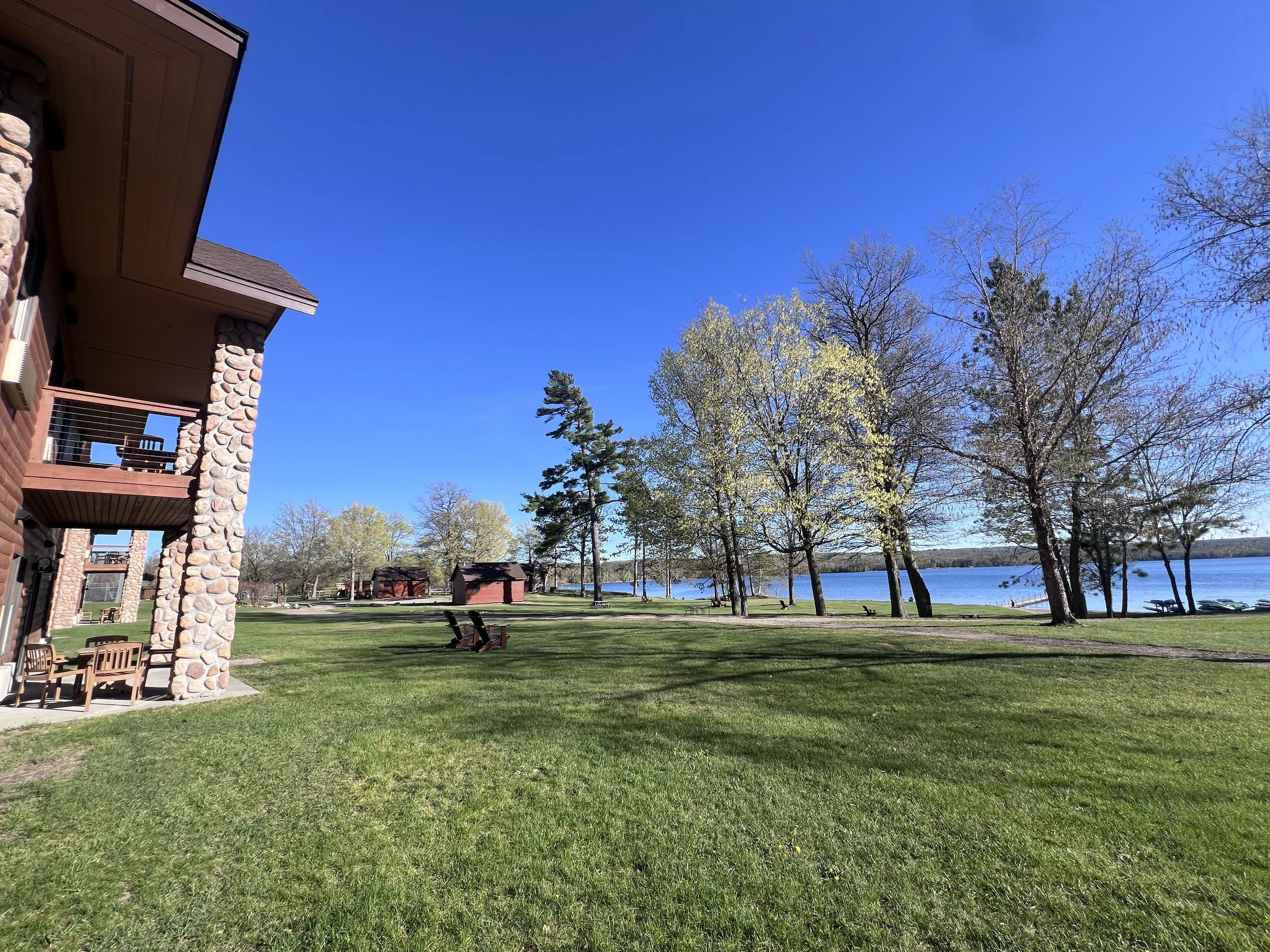
Meanwhile, back at Sugar Lake Lodge, Bryana and Stacy led yoga classes. Stacy’s midday class was a bit of an invigorating burst in the day. While Bryana’s late afternoon class was a total soft relaxation and release.
We filled our bellies with delicious dinner and dessert.
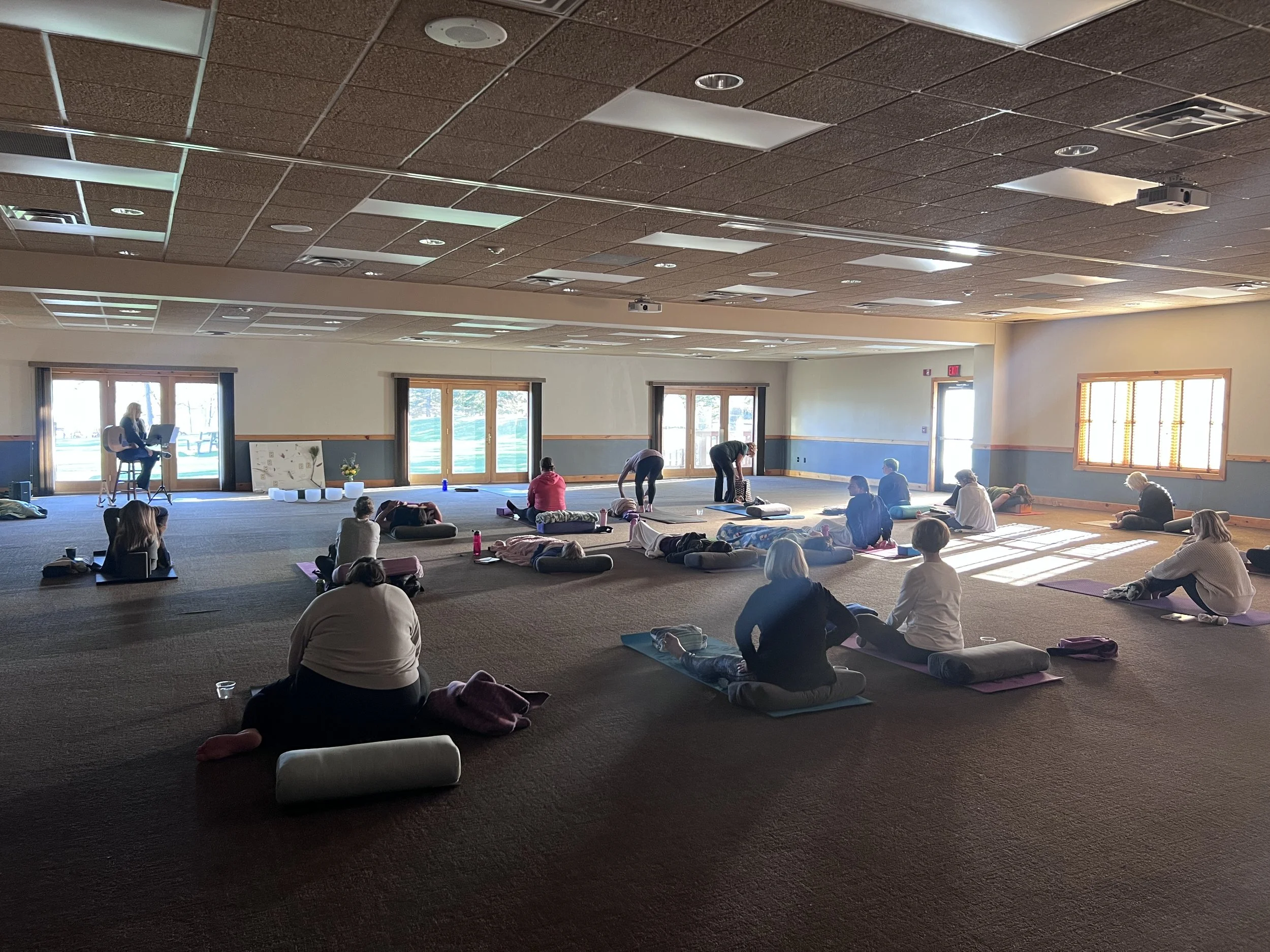
We returned to the yoga space for a relaxing, soothing sound experience.
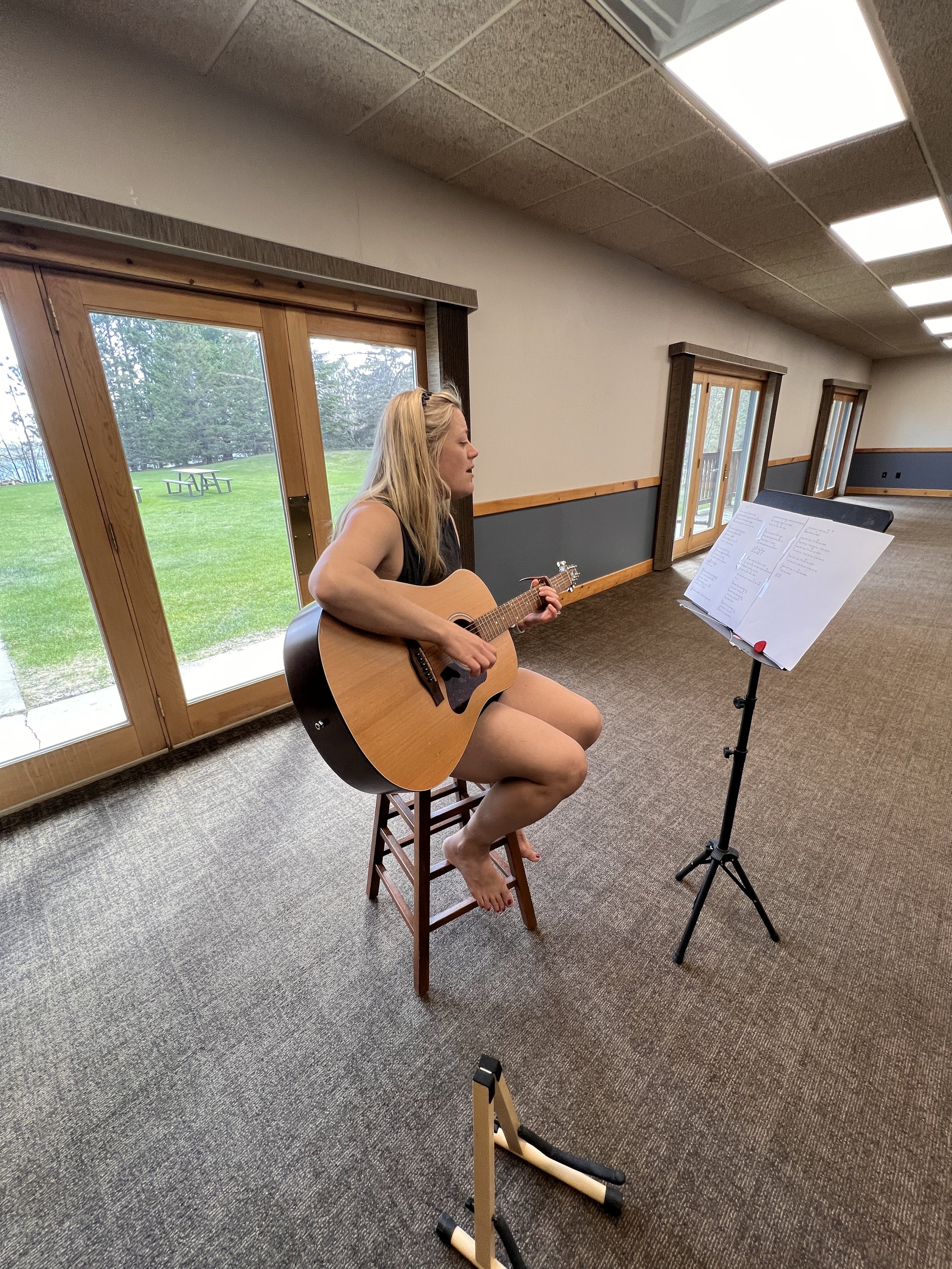
A mixture of guitar, gentle yoga, yoga nidra, and sound bowls for 90 minutes had all of us feeling exhausted and relaxed. I love that feeling at the end of a day full of fresh air and physical activity.
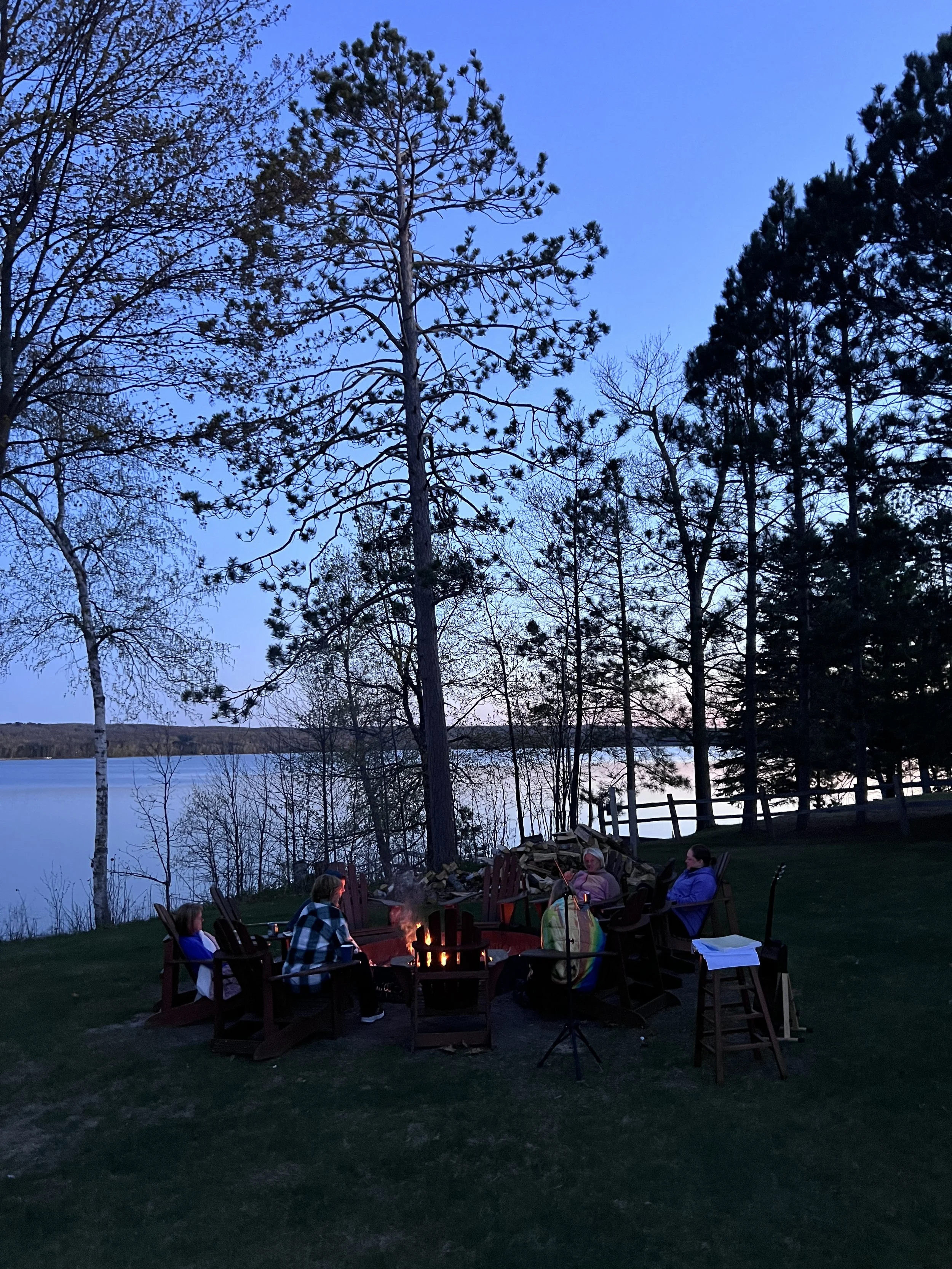
We were supposed to have a sing-a-long by the fire, but most of us were too pooped. A few of us watched the sun set over the lake by the fire before we retired to sweet sleep.
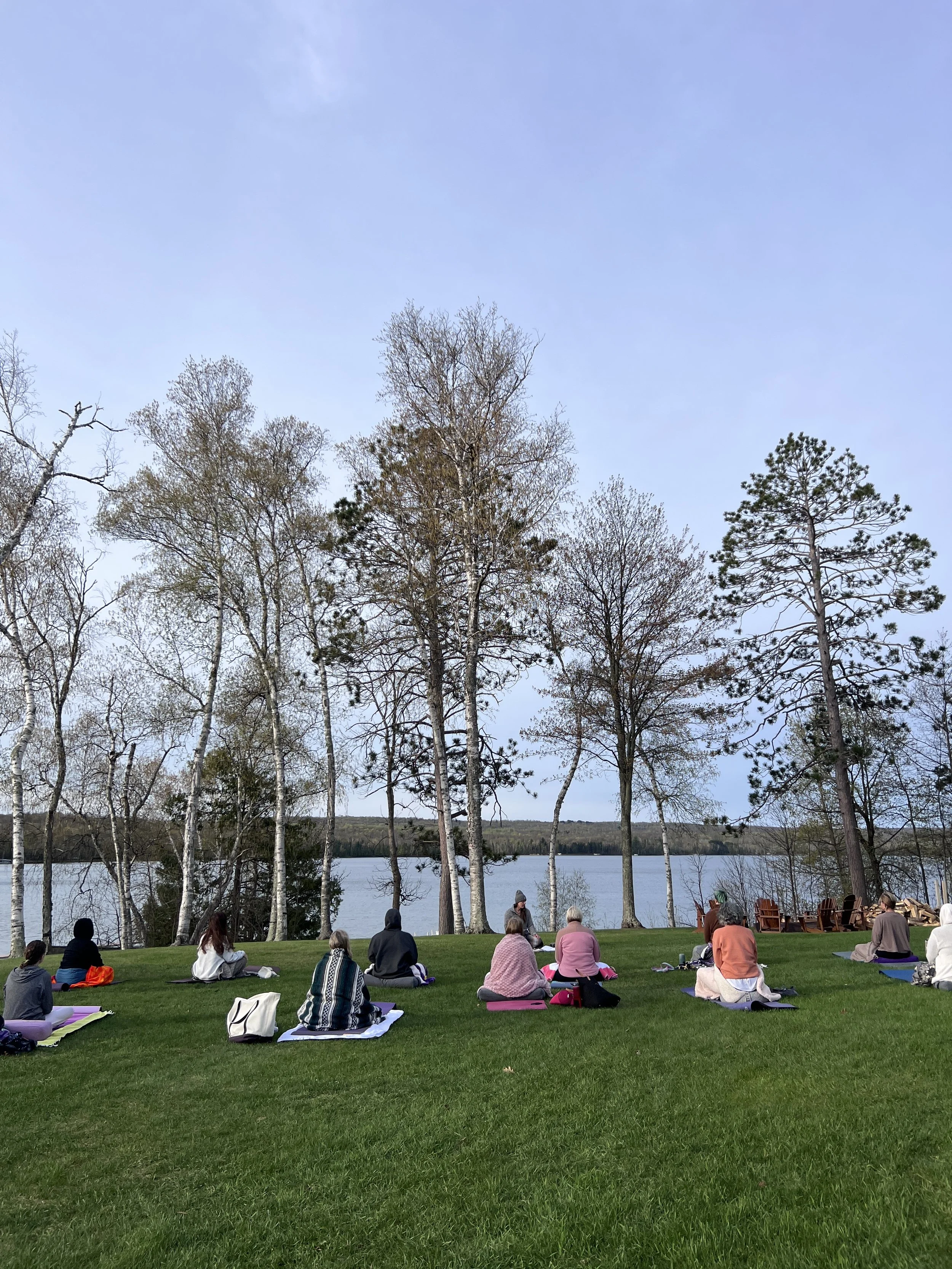
The next morning Stacy surprised everyone with a morning meditation outside. Lilac Linda declared, “It’s 38 degrees!” lol. Being hardy Minnesotans, they stayed outside and were rewarded with loon calls on the lake.
During savasana in our final class I shared the poems Startlement and The Origin Revisited, which can be found on pages 194-196.
The closing circle stood out to both Stacy and I as one of the most moving closing circles we can recall. Sometimes at retreats, people have a great time, but maybe don’t reach the vulnerable level with others. The closing circle can be rather quiet. Content, but not a lot of sharing.
This closing circle was rich with reflections and poetry. We are in the chaos, but we do not embody it. We can hold both grief and joy. We discussed how when you carry one bucket, you are off kilter. When you carry two full buckets, you have balance. We have to move through difficulty while also stopping to notice the beauty all around us.
Happy Heather shared with us the beautiful poem Joy Comes Back by Donna Ashworth.
Caring Kathleen had us in tears with this humdinger:
Big Girl Panties by Kathleen
Put on my big girl panties, the ones with the flowers, that don’t ride up.
Put on my comfiest, cutest outfit and a smile to match.
Give a hug and listen to others, and be confident I can do anything;
in my big girl panties with the flowers, that don’t ride up.
Just Jen shared this beautiful poem with us:
Friends with Old Women by Jen
We are not old.
But we have lived.
We have lost.
We have learned.
We have grieved.
Succeeded.
Failed.
Survived.
We connect easily.
With interest in each other.
With curiosity.
With compassion.
Empathy
Knowing
Without Judgement
We have nothing more to prove.
Not interested in competition or being the best.
We connect because of our complicated lives,
Even though we do not know each other’s origin story.
We know the importance of community.
We know the gift of time.
We know the scarcity of peace.
We showed up to the circle.
We opened our hearts.
We are connected by an experience.
We are friends who may never meet again.
We are brilliant.
We are young at heart, old in experience.
We are a gift.
In Defense of Poetry by Amanda
Anything I have ever felt
Has been felt before
I am never alone
Poetry reaches cross space and time
In the darkest moments to
Remind us we will survive
We will survive the unimaginable pain
Poetry reminds us grief is part of being human
And to delight in
The splendor of an ant hill
The triumph of a beaver dam
The flight of a mallard
The first loon call in spring
Poetry is the one true thing
In a world distracted by illusions
Always wanting more
Poetry reminds us
We already have it all
That we are incredibly capably resiliently abundant
I leave you with one last bit of advice….
Just secretly believe that you are a witch
And trust that the magic is real.
I want to share a few of the poems we loved from the book. I also wanted to share a few writing prompt ideas inspired by the book that we didn’t have time to explore at the retreat.
Ancestors pg 105
The Spider Web pg 23
Centerfold pg 32
Flood Coming pg 57
Ways to Ease Your Animal Mind pg 69
Drowning in Paradise pg 76
How to Triumph Like a Girl pg 81
The Impossible Age of Everyone pg 82
Dandelion Insomnia page 110
The Raincoat pg 107
This Darkness pg 11
The Year of the Goldfinches pg 119
Wonder Woman pg 116
Carrying pg 126
Sanctuary pg 134
And, Too, the Fox pg 137
Every Blooming Thing pg 190
The Hurting Kind pg 151
Writing Prompts Inspired by her poetry
Follow the pattern from the Spider Web (page 23) where the next stanza begins with the last line of the previous stanza, connecting ideas through the poem
Inspired by the title: Marketing life for those of us left. Write a poem with a similar title like, “marketing earth to our children” etc.
Try something like “The Quiet Machine” but make it your own. Maybe your own quiet machine, maybe you write about a laughter machine or a comfy machine or a singing machine…
Read Ancestors on page 105. Write your own origin poem.
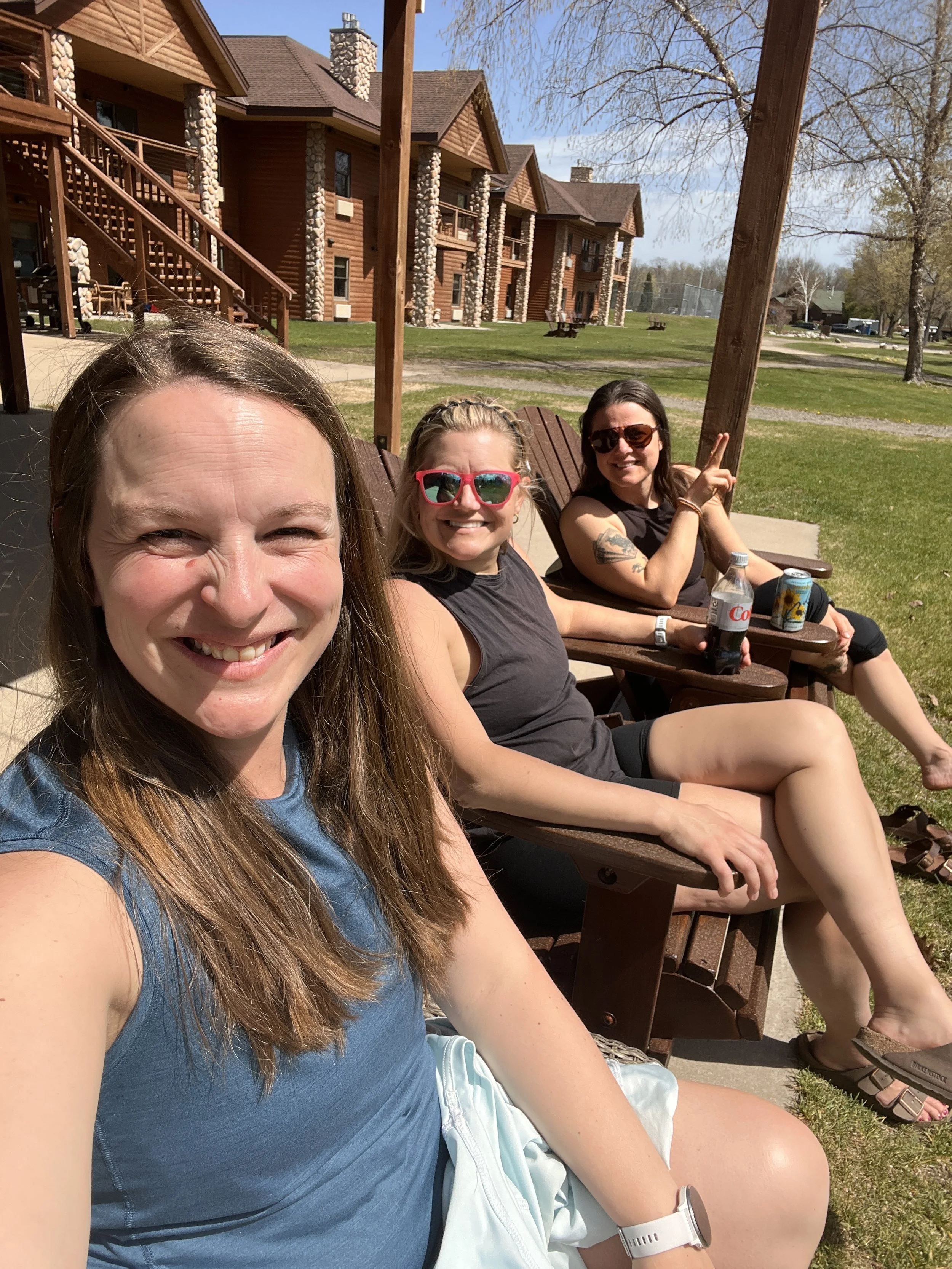
Thank you, thank you, thank you! To all of our retreaters that spent a weekend at Sugar Lake Lodge with us. To our massage therapists Mary & Patti, and to the wonderful crew at Sugar Lake Lodge. We enjoyed our weekend with you and can’t wait to do it again!
Save the date: May 21-23, 2027
Looking for an inspiring lakeside retreat? Registration is closing at the end of the day Wednesday for our Startlement Yoga Retreat!