Product Trap
I just started my ninth semester teaching at the College of St. Scholastica. In the fall, I teach Principles of Microeconomics. I love teaching students a new framework for thinking about the decisions they make every day, to make decisions without regrets, and to “think like an economist.”
I love seeing the world in this way. My sister has told me that this can sometimes make me a bit harsh, because I see things in black and white and not shades of gray. I tend to be blunt and honest. For example, my sister was living in her in-laws basement while saving up for a house. She thought they would be there for a few months. I said, “well I’d be prepared to live here a year or two. With current interest rates, you will want to have a larger down payment in order to afford the monthly payments.” Blunt, honest, but also not what she needed to hear in that moment.
Now, we often laugh about these moments when I say something extremely blunt. All that preamble is to say, I want to share one of my favorite concepts from my course with you.
People think that economics is all about supply and demand. In my mind, economics is also about the ways we move through the world.
In economics, we assume this character we call “Homo economicus”, or the perfectly rational human being, who is always maximizing their utility based on their preferences and constraints.
Utility is pretty much synonymous with well-being. A day filled with enjoyment, meaning, or connection might provide a great deal of utility; a day dominated by pain, anxiety, or frustration might provide much less.
Traditional economic models often assume that people make consistent choices intended to maximize their utility, given the constraints they face. Of course, real people, and our preferences, are far messier. Behavioral economics explores the predictable ways our choices depart from that perfectly rational model.
But sometimes the problem isn’t that we are behaving irrationally. Sometimes individually reasonable choices leave nearly everyone worse off. One example is something economists call a product trap.
A product trap occurs when people individually feel compelled to use or purchase something, even though many of them would collectively prefer a world in which it did not exist.
Examples:
Elf on the shelf. So many people do it, your kids will wonder why your home doesn’t have an elf if you don’t do it… but many people wish they didn’t have to move the elf every night.
Botox. Botox and other aesthetic treatments are very common and seeing healthy aging faces is becoming less common (shout out to Pam Anderson!). This behavior pressures people to engage in treatments to slow the perfectly natural and beautiful aging process.
Giving gifts at Christmas. Many people find giving and receiving gifts a waste of time and energy and would prefer to skip the whole endeavor. There’s another economics term, the deadweight loss of Christmas, that explains how you’d be better off exchanging $20 bills instead of a candle that you don’t really want and your money could have been utilized better elsewhere. But I digress. Also, I love gifts.
There is a fear of missing out on a thing we wish didn’t exist, and this is how we become trapped.
I think this perfectly describes social media. People wish they spent less time on it. They wish it didn’t exist. They wish they weren’t obligated to use it. So why is it so hard to quit?
I think I’ve pretty successfully quit social media. I quit Facebook years ago now. My retreat from Instagram took much longer, well over a year. First, I stopped posting. Then, I deleted the app from my phone and just downloaded it when I wanted a binge. I’d download the app a few times a week and get all caught up. In June, I started to notice I felt dread about downloading the app.
So I stopped downloading it. I still have an account and can get back on at any time. Who knows if/when I’ll get sucked back in.
I know I’m missing out on funny videos, community events, information, and updates about friends and family. I constantly apologize to Bryana because as a small business owner social media is so important.
Bryana has her own guardrails with social media that she maintains. Thankfully, Bryana is supportive of my decision to opt out. (She’s the best).
I still feel so busy and frankly, often stressed, I don’t know how I ever had time for social media in the first place. Lol! When I see people out and about, they don’t know about my latest vacation and I don’t know about theirs. It’s a beautiful thing. We can connect, in person.
I’ve lost track of the hundreds of acquaintances I used to follow. I am slowly forgetting their names.
I’m mailing snail mail, calling my family, and pursuing the little delights that make me happy, like decorating my Halloween Trail.
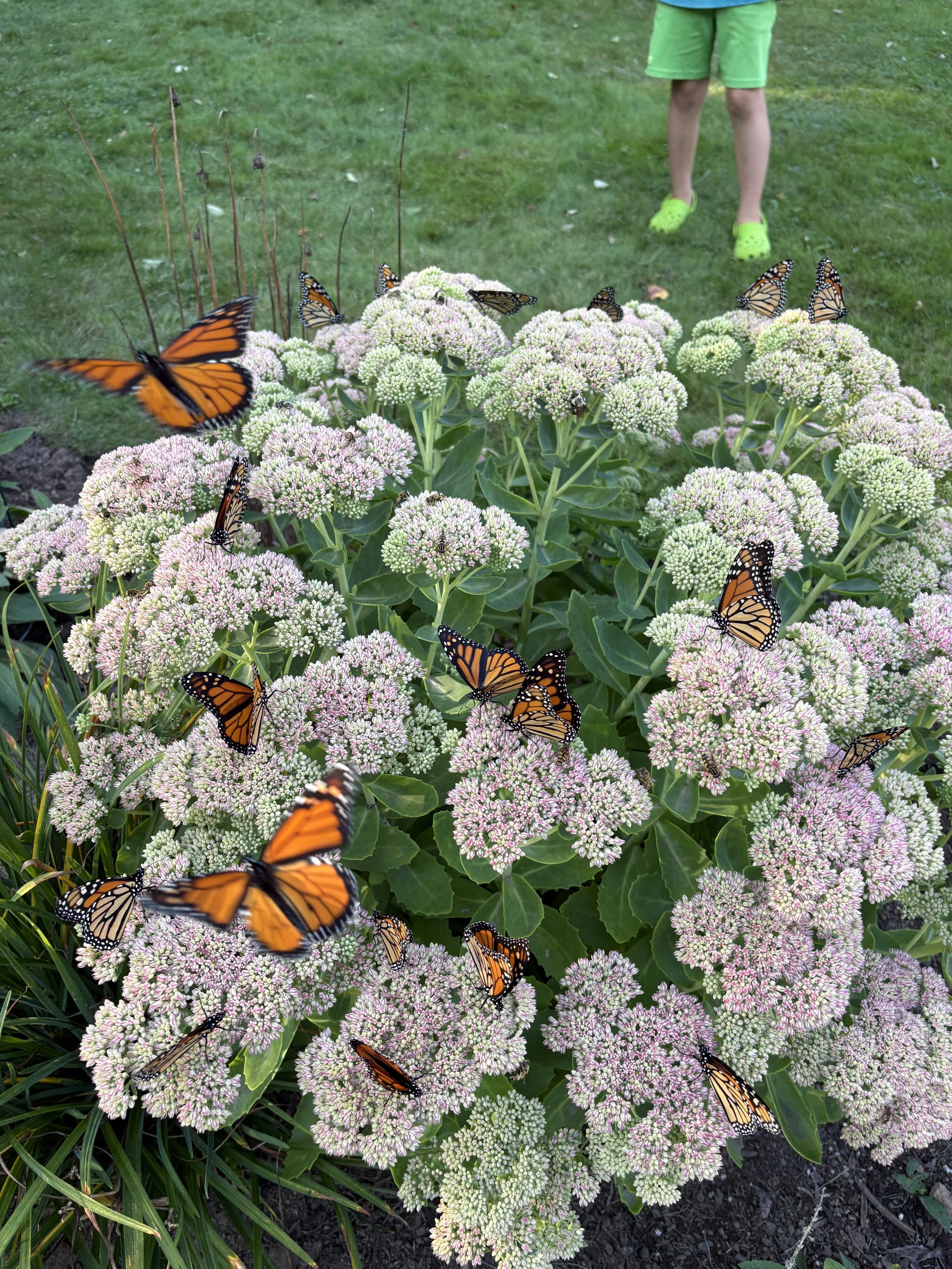
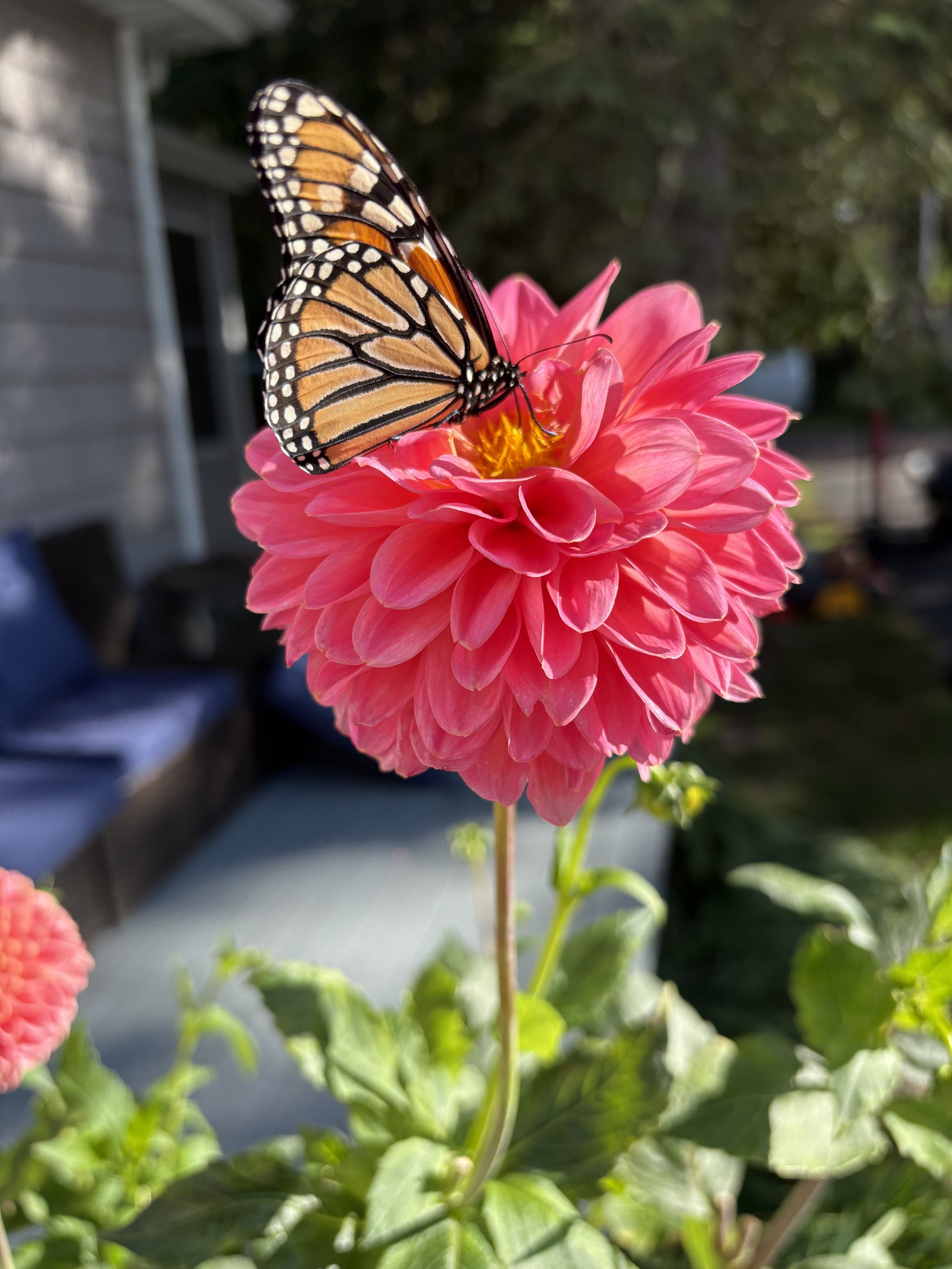
I’ve just been over here taking pictures of my flowers, butterflies on my flowers, my kids in front of my flowers, and the only person who will enjoy them is me.
Love, Amanda